Image-to-Video Is Actually Usable Now — Here Is What Changed
 PicX Studio Team8 min read
You already know the clip. You start with a still you actually like. You ask for video. What comes back is the same picture, slowly drifting or easing in, as if someone were breathing on a tripod. The subject does not act. Light does not change for a reason. It is a photograph with a pan applied by a system that could not keep a face together if it tried to animate it for real.
That was a time problem. Each new frame was close enough to look related, and not constrained enough to look like the same person doing the same thing in the same place. When the model attempted genuine motion, identity came apart. Sliding a still and calling it video was the compromise.
That compromise is no longer the default. Motion can respect the source image. A subject can remain itself for a short clip. Sound can arrive with the picture instead of being attached later. That is enough of a change to decide whether this is worth your time. It is not enough to treat the result like a camera.
Consistency Across Time, Not Across a Single Frame
A video is not a stack of good images. It is a sequence in which every part of the frame has a relationship to the part that occupied the same role a moment earlier. Hair should move as hair, not become a new cut. A jacket should wrinkle, not become a different jacket. If someone turns their head, the ear that was hidden should appear as that person's ear.
Older image-to-video systems treated time as a weak suggestion. They could match style and composition. They could not lock identity, lighting, and object boundaries tightly enough for motion to look caused rather than approximated. At full speed, the approximation showed up as shimmer and morphing.
What improved is the ability to carry a subject forward as a stable object while still letting the parts that should move, move. The first frame is no longer a mood board. It is a constraint. The face in the opening frame is the face the rest of the clip is trying not to lose. Clothing and set dressing are treated more like facts than like atmosphere.
That is why modest clips feel different. A slight head turn that keeps the same person is more useful than a dramatic orbit that turns them into a relative. Small, physically plausible motion is the range in which consistency currently holds.
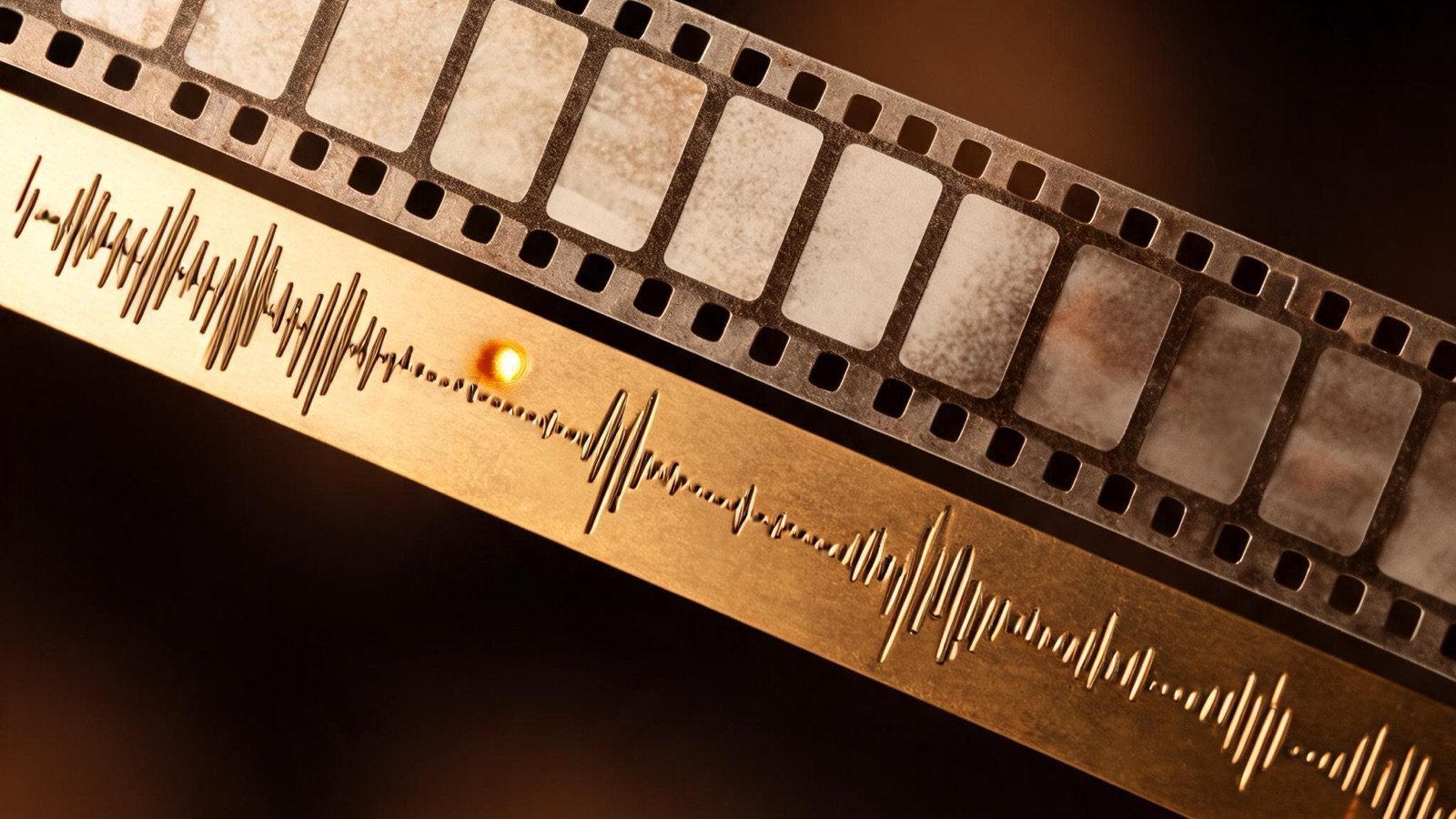
Native audio belongs to the same shift. A silent clip forces you to invent a soundtrack, and a mismatched soundtrack makes even decent motion feel like a slideshow. When picture and sound can be generated as one take — room tone, a footstep, the scrape of a chair — the clip reads as an event instead of a picture that learned to wiggle. Audio is still easy to get wrong, and wrong audio is worse than silence. You are judging one take, not a still plus a score.
The First Frame Does the Heavy Work
If you have been prompting stills, your instinct is to put the whole idea in text: who is there, what they wear, what the light is doing. That habit works against you here.
The model is not primarily illustrating your prompt. It is extending your image. The prompt's job is to say what should happen to that image over time. Everything the first frame already shows — identity, wardrobe, setting, lens, color — is cheaper and more reliable as pixels than as words. If the still says one thing and the prompt says another, the still usually wins, and the conflict shows up as distortion rather than as interpretation.
This is why the source frame matters more than the cleverness of the motion prompt. A soft, ambiguous face will not become a sharp, consistent actor because you asked for a cinematic move. A crowded still gives the model too many objects to keep honest at once. Text, logos, fine jewelry, and tangled hands are liabilities before you have written a single instruction, because they are the details the system is worst at tracking from frame to frame.
Treat the still as a locked shot. If you would not accept that frame as a thumbnail, do not spend a generation trying to animate it. Fix the still first. Crop out the junk. Choose a pose that can actually continue — a person who can take a step is easier to extend than a person whose limbs already overlap. Leave space for the motion you want. If someone is going to walk, they need somewhere to walk into. If a camera is going to push in, the subject should not already be cropped at the hairline.
The prompt should assume the picture exists. You are not describing a woman in a red coat on a rainy street. You are describing what the woman already in the frame does, what the camera does, and what the weather already in the frame continues to do. Restating the picture spends attention the model could use on trajectory.
Describe the Movement, Not the Scene
A still prompt describes a state. A video prompt describes a change. Those are different sentences.
State: a man stands in a kitchen, morning light, coffee in hand. Change: he lifts the cup, takes a sip, and looks toward the window as steam drifts.
The second sentence gives the model a sequence with a beginning, a middle, and a physical cause. The first gives it a picture it already has, so it invents motion to fill the duration — often a slow push-in or a meaningless sway. When you do not specify motion, the model still has to produce frames. Idle drift is what it produces.
Separate camera and subject. "The camera dollies in" and "she turns to look offscreen" are two instructions. Mixing them into "cinematic movement" tells the model to do something filmic without telling it what. The more adjectives you stack about mood, the less room you leave for verbs. Verbs are the payload.
Keep the motion simple enough to survive the duration. One primary action is more reliable than a pile of them. Pick a lead — a look, a walk, a turn, a camera move — and let the rest be consequence. Fast action is where the model starts guessing at in-between frames it cannot quite compute. Slow, continuous motion is not a style preference. It is the regime in which each frame has the most evidence from the last.
If you need a cut, make a cut. Image-to-video is closer to a take than to an edit. Trying to get a wide, a close-up, and a reveal in one clip is how you get morphing.
Describe direction and speed in ordinary language. Left, right, toward camera, away, a little, slowly. "Handheld" will introduce shake. Use it if you want shake. "Orbit" will try to move around the subject and will often break the background, because the model has to invent the sides of objects it has not seen. "Push in" is safer because occlusions change less.
Where the Failure Is Still Obvious
Hands remain the tell. Fingers interpenetrate, grips miss the object, a spare hand appears because the silhouette needed filling. If the action is about a hand, design the still so the hand is simple, unobscured, and not performing a complex grasp. If the action is not about a hand, keep hands at rest or out of the focal plane.
Text fails in a way you cannot unsee. Anything readable in the source will try to remain readable, and will usually swim, rewrite itself, or almost say the brand. If type is not essential, remove it from the still. If it is essential, plan to replace it later.
Fast motion is a structural problem. Real cameras hide in-between complexity with blur. Generated fast motion has to invent those in-betweens as structure, then pretend they were blurred. The result is smear, duplicated limbs, and backgrounds that smear independently of the subject. Ask for less speed than you think you want.
Length is a budget. The longer the clip, the more chances the subject has to drift. Identity holds for a short take and then starts to negotiate: the face is still that person, then a person like that person, then someone else wearing the outfit. Backgrounds breathe. Lighting wanders. Audio that started in sync loses its relationship to the picture.
There is no prompt trick that makes a long clip as stable as a short one, because the error is cumulative. Each frame is conditioned on a history that already contains small mistakes, and those mistakes become the new source of truth. You are better off generating several short takes from the same still, or from a sequence of stills, and cutting them, than asking one generation to hold a performance.
Other failures sit on the same boundary: reflections that do not match, crowds in which extras melt, animals whose gait never quite becomes walking. Usable means a clip you would put under a voiceover or in a story, if you stay inside that boundary and you are willing to regenerate.
What Worth Your Time Looks Like
Decide on a job, not a mood. Image-to-video is worth it when you need a brief stretch of life in a frame you already have: a portrait that looks, a product that turns just enough, a location that holds weather, a character who performs one readable action. It is not worth it when you need choreography, readable signage, a hero hand-off, or a continuous scene.
Work in this order. Make or pick the still as if it were the first frame of a real take. Write a prompt that only describes change. Ask for one motion idea. Keep the duration short enough that you would not be embarrassed to cut away. Watch the result at full speed, then scrub it. Full speed hides morphing; scrubbing does not. If the subject is still themselves at the end, and the motion you asked for is the motion you got, keep it. If you are explaining the clip to yourself, it is not done.
Audio is a check, not a trophy. If the sound supports the motion, leave it. If it argues with the picture, mute it and score it yourself.
Spend retries on the still, not on decorating the prompt. If several motion prompts on the same weak still fail in the same way, the still is the problem. If you are iterating because you want a long, fast, hand-heavy, text-heavy scene, you are paying for a result the medium does not currently sell.
PicX Studio is relevant only in the boring sense that the still and the clip can live in the same workflow. The judgment does not change with the product. Treat this like a B-roll library: short, directed, disposable takes that assemble into something longer. That is the honest use. Hoping a single generation will replace a shoot is not. What changed is that the short take is no longer an insult to the still you started with.
- #video
- #image-to-video
- #motion