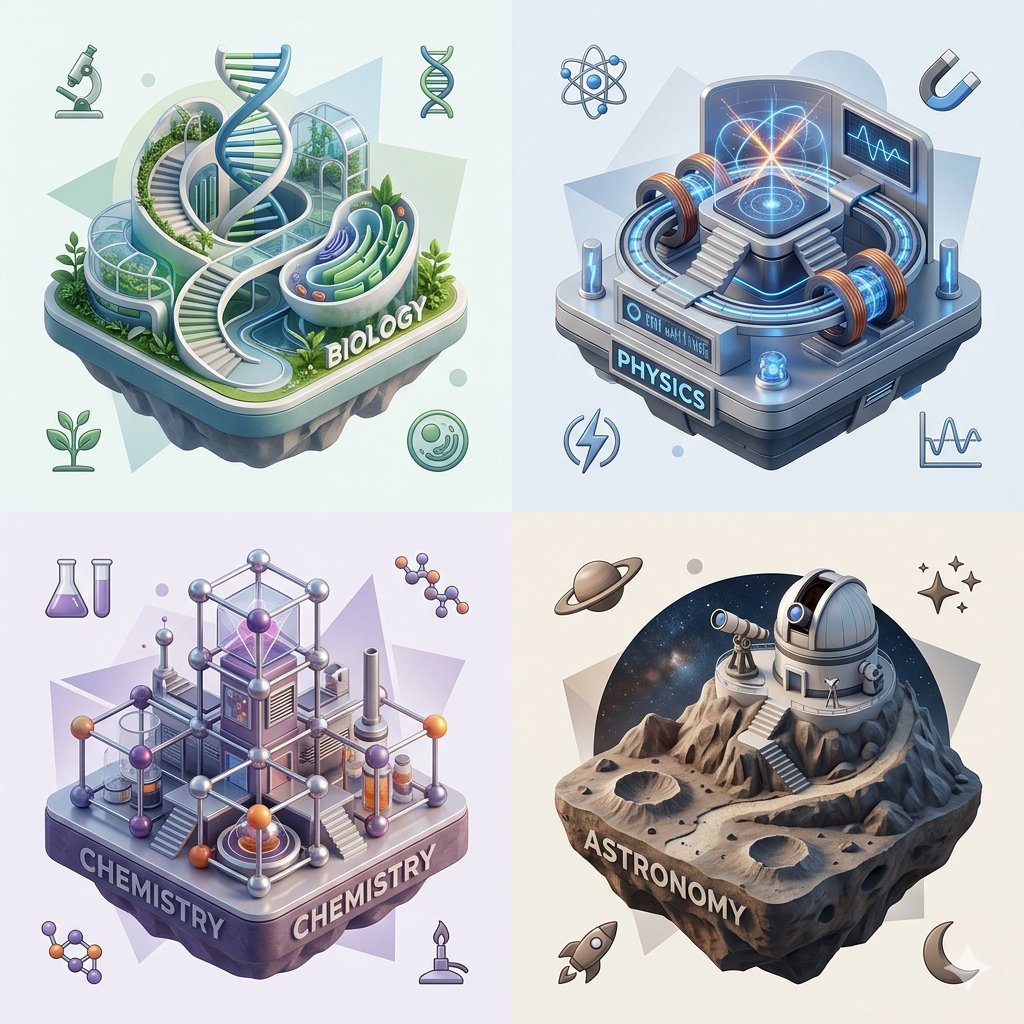
How do I use the Nano Banana Pro Science Prompt Template template?
Choose the primary action to open PicX Studio with the available template settings. Review the model and format, personalize the creative direction, and generate when ready.
A highly structured, multi-phase prompt designed for Nano Banana Pro to visualize complex scientific or mathematical theories. Change the subject, setting, or lighting one variable at a time.

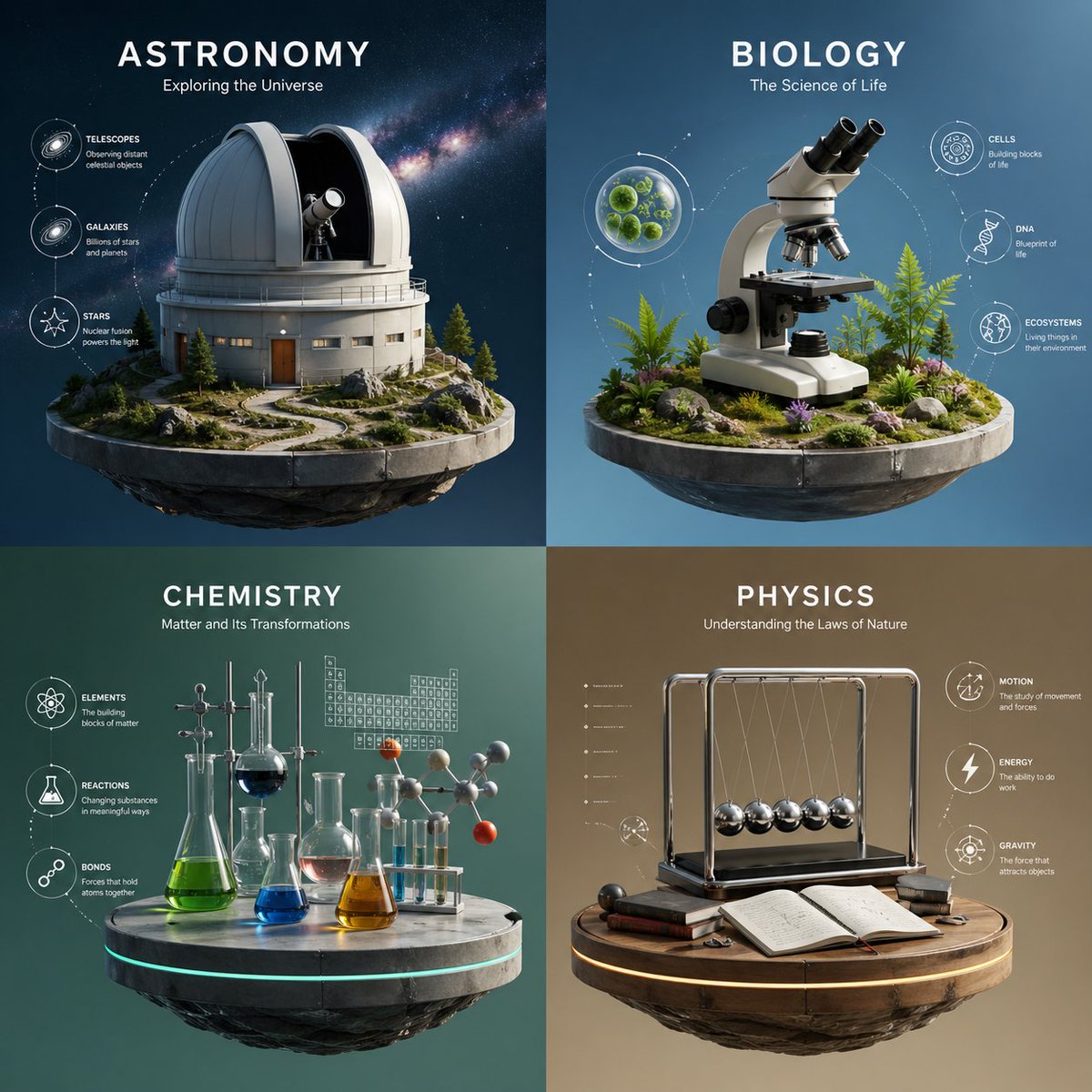
2x2 grid, do this for 4 famous PHD level science or math topics <instructions> Input Variable: {argument name="theorem or formula" default="Theorem / Formula"} Phase 1: Schematic Decomposition Analyze the Notation: Identify the primary visual language of the scientist (Chalk on blackboard? Ink on parchment? Pencil on graph paper?). Identify the "Structure": If this theory were a building, what would it look like? Logic: Chaos Theory -> Fractal Spire. Thermodynamics -> Engine Block. Phase 2: The Dimensional Transition The Base: A flat surface covered in the [Notation Medium] (e.g., a slate blackboard covered in chalk equations). The Extrusion: The chalk lines physically lift off the surface. They begin as white wireframes, then gain opacity, then gain texture. The Climax: At the top of the image, the wireframes have fully solidified into a photorealistic, impossible structure representing the theory. The Observer: A tiny, scale-model figure of the scientist stands on the flat "2D" section, looking up in awe at the massive "3D" structure they have summoned. Output: High-Angle Isometric, "3D mod designer toy" style, stark contrast between sketchy lines and solid mass. </instructions>
Choose the primary action to open PicX Studio with the available template settings. Review the model and format, personalize the creative direction, and generate when ready.
Yes. You can change the subject, setting, lighting, mood, format, and available model controls before creating your image.
This template is free to open and customize. Generation usage is shown in PicX Studio before you create.
Start with Nano Banana 2, which is the model associated with this template. You can compare another compatible model for a different finish.
© 2026 PicX Studio. All rights reserved.

Follow a topic to a crawlable collection of related PicX Studio templates.
43,474 public templates available. Verified via the PicX Studio public templates API; refreshed hourly.





![Act as a Master of Material Science and World-Class 3D Visualizer — [BRAND NAME]. Act as a Master of Material Science and World-Class 3D Visualizer.
PHASE 1: DY](https://images.meigen.ai/tweets/2021588846849282513/0.jpg)





![Macro Diorama Historical Rivalry (Science Wars) — <instructions>
Input: Invention/Rivalry = {argument name="invention/rivalry" default="[User Choice]"}
Phase](https://pbs.twimg.com/media/G9B-1KFXMAA8otj.jpg)

![Naive doodle-style subject illustration — A doodle-style {argument name="subject" default="[subject]"}, naive lines, humorous shape exaggeration](https://pbs.twimg.com/media/G6Wl2YxbsAARB2b.jpg)







![The Dark Godfather Structural Portrait — [GPT-image2 Structural Prompt: {argument name="主题" default="The Dark Godfather"}]
### 1. Identity Transformation (核心人像](https://cms-assets.youmind.com/media/1778921885782_y5f8ss_HIXWnBGXIAAMJj7.jpg)