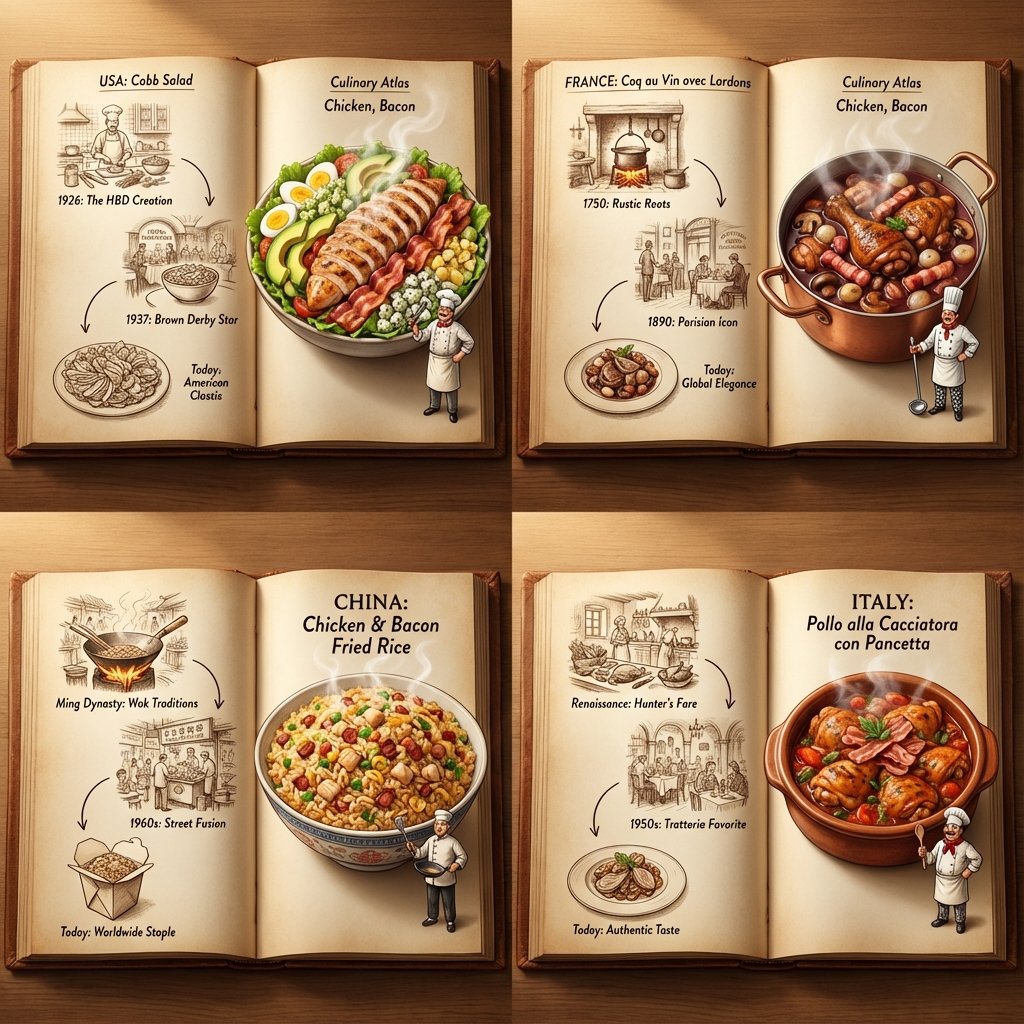
How do I use the Historical Macro Diorama: Culinary Atlas Grid template?
Choose the primary action to open PicX Studio with the available template settings. Review the model and format, personalize the creative direction, and generate when ready.
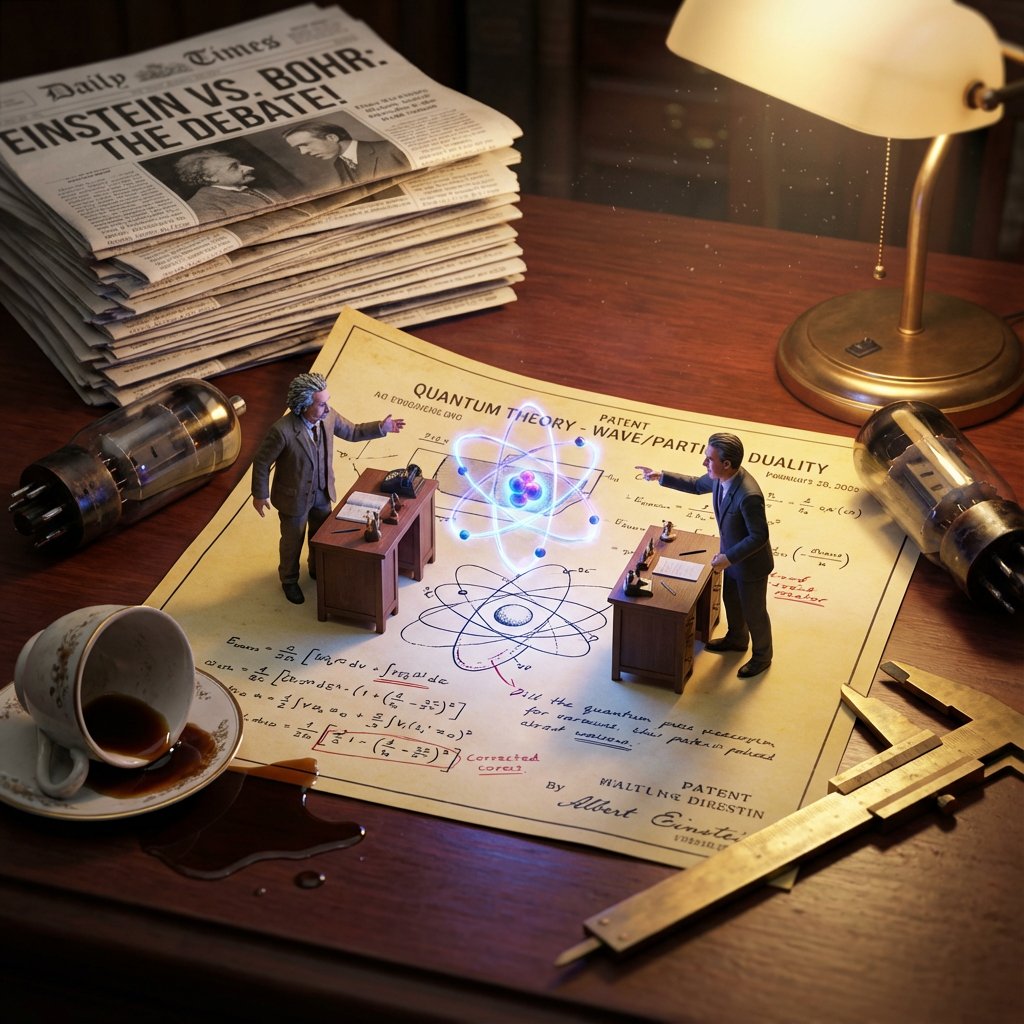
A complex, multi-phase prompt designed to generate a 2x2 grid of 'Historical Macro Dioramas' based on user-selected ingredients. Change the subject, setting, or lighting one variable at a time.

Role:Historical Art Director & Macro Photographer. Input: Invention or Rivalry = [{argument name="user choice" default="User Choice"}] Phase 1: Chronological Profiling Before rendering, analyze the Year of the invention to determine the "Era Texture": If Ancient (e.g., 200 BC): Surface = Rough Stone or Papyrus. Light = Oil Lamp/Torch. Clutter = Clay shards, bronze chisels, scrolls, figs/grapes. If Renaissance (e.g., 1500): Surface = Dark Oak & Vellum. Light = Candle. Clutter = Quill feathers, wax seals, brass astrolabes, leather binding. If Industrial (e.g., 1890): Surface = Green Felt or Mahogany. Light = Gas/Filament. Clutter = Newsprint, pocket watches, copper wire, soot. If Modern (e.g., 1980): Surface = Formica or Metal. Light = Fluorescent/Neon. Clutter = Circuit boards, Polaroid photos, soda cans, plastic casings. Phase 2: Visual Execution Goal: A hyper-detailed "Macro Diorama" where the environment tells the story of the time period. Subject: A messy, chaotic workspace viewed through a macro lens. 1. The Stage (The Document): The "ground" is the primary design medium of that era The surface is filled with era-specific sketches/carvings of the invention. 2. The Living Miniatures: Two tiny, hyper-realistic figurines (The Inventor & The Rival) stand on this surface. They are dressed strictly in period-accurate clothing (Togas vs. Frock Coats vs. Turtlenecks). Action: They are interacting with a 3D Prototype of the invention that is rising physically out of the document/tablet. 3. The "Giant" Atmosphere (Dynamic Enrichment): The Wall: A massive background object establishing context (e.g., a carved stone stele, a tapestried wall, a vintage newspaper, or a stack of VHS tapes). The Tools: Giant-scale tools used to make the invention loom over the figures like trees (e.g., a giant chisel, a massive quill dipped in ink, or a soldering iron). The Debris: The mess of the creative process (e.g., stone dust, spilled ink, burnt fuses, or crumpled layout paper). The Comforts: Food/Drink of the era (e.g., an earthen jug of wine, a porcelain tea cup, or a can of cola). 4. Technical Specs: Lighting: Must match the "Era Light" determined in Phase 1 (Flickering warm fire vs. cold electric buzz). Perspective: Tilt-shift macro photography (45-degree angle). Texture: Extreme focus on material weathering (rust, dust, parchment cracks, or plastic sheen). Output: ONE image, 4:5 aspect ratio, "Historical Macro Realism."
Choose the primary action to open PicX Studio with the available template settings. Review the model and format, personalize the creative direction, and generate when ready.
Yes. You can change the subject, setting, lighting, mood, format, and available model controls before creating your image.
This template is free to open and customize. Generation usage is shown in PicX Studio before you create.
Start with Nano Banana 2, which is the model associated with this template. You can compare another compatible model for a different finish.
Follow a topic to a crawlable collection of related PicX Studio templates.
43,474 public templates available. Verified via the PicX Studio public templates API; refreshed hourly.





![Magazine Brand Concept Product Photography — [BRAND NAME] high-end glossy concept art magazine editorial photograph of a unique unexpected functi…](/_next/image?url=https%3A%2F%2Fcdn.picxstudio.com%2Fuploads%2Fmirror_8885eb8c-24cd-420e-b981-20ae3af2665b.jpg&w=828&q=100)
![Movement Sheet - Dance Reference (Seedance 2.0) — [STYLE]
Monochrome grayscale illustration, 3D-rendered character, clean instructional reference sheet, white b](https://pbs.twimg.com/media/HGzSvcnboAA_bjD.jpg?name=orig)
![Extreme close-up macro of miniature city diorama on a solid base, held — Extreme close-up macro of miniature city diorama [CITY, COUNTRY] on a solid base, held](https://images.meigen.ai/tweets/2007777809712976297/0.jpg)

![Editorial Concept Study Product Design — [BRAND NAME] editorial photograph of a unique functional object conceptualized by the brand. Invent…](/_next/image?url=https%3A%2F%2Fcdn.picxstudio.com%2Fuploads%2Fmirror_77cffdd4-75b0-4069-963b-ab70c3b5edee.jpg&w=828&q=100)
![Isometric Brand Store Diorama — Present a clear, 45° top-down isometric miniature 3D cartoon diorama of the [BRAND], with soft refin…](/_next/image?url=https%3A%2F%2Fcdn.picxstudio.com%2Fuploads%2Fmeigen_18578a8c7cb6_25c7ccef-837d-4949-99fb-d6321dc5c72c.jpg&w=828&q=100)

![Naive doodle-style subject illustration — A doodle-style {argument name="subject" default="[subject]"}, naive lines, humorous shape exaggeration](https://pbs.twimg.com/media/G6Wl2YxbsAARB2b.jpg)