How do I use the Fighter Jet Aerial Combat Montage — Seedance 2.5 template?
Edit the prompt in the box under the preview — the template's model and format are already selected — and press Generate. Your version appears right on this page.
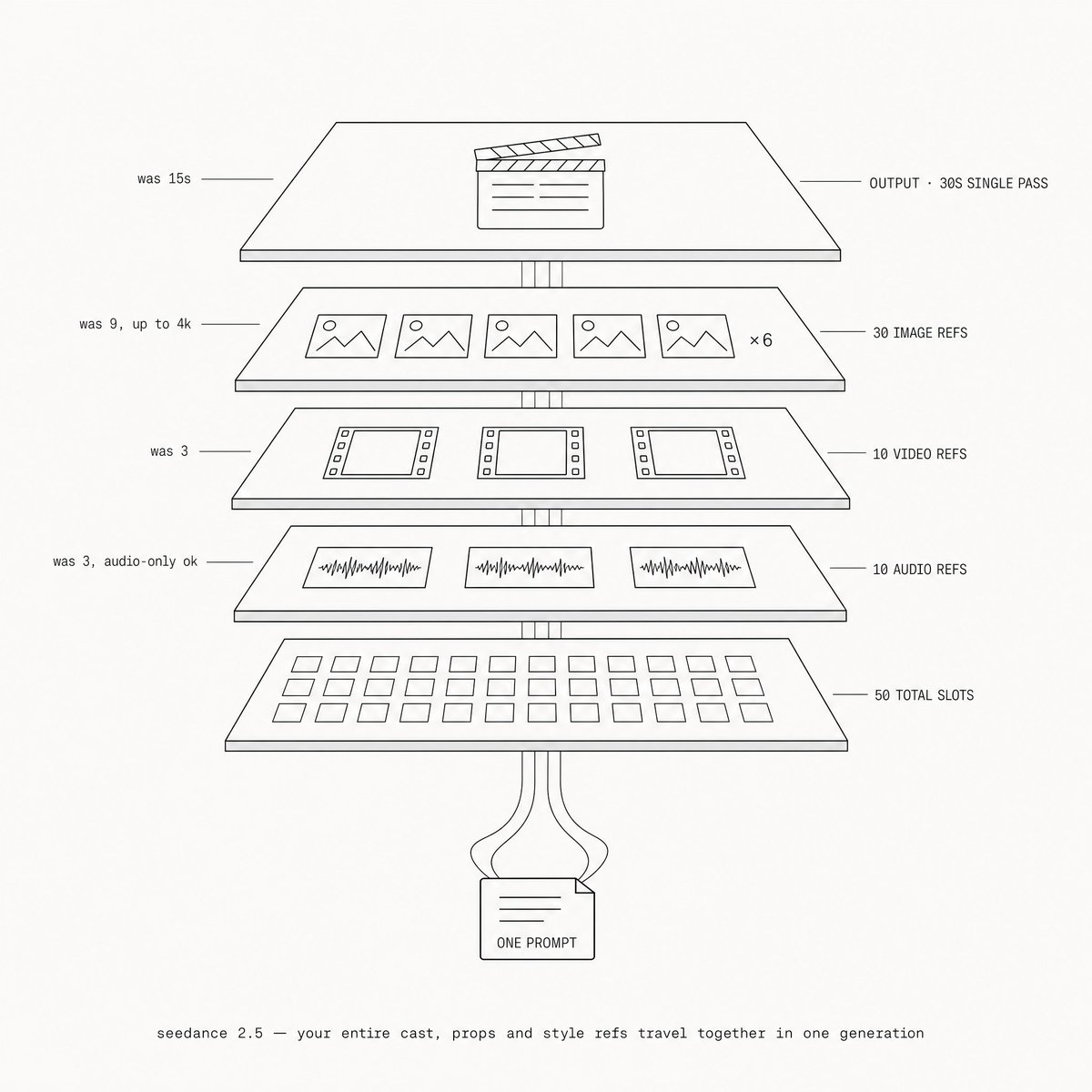
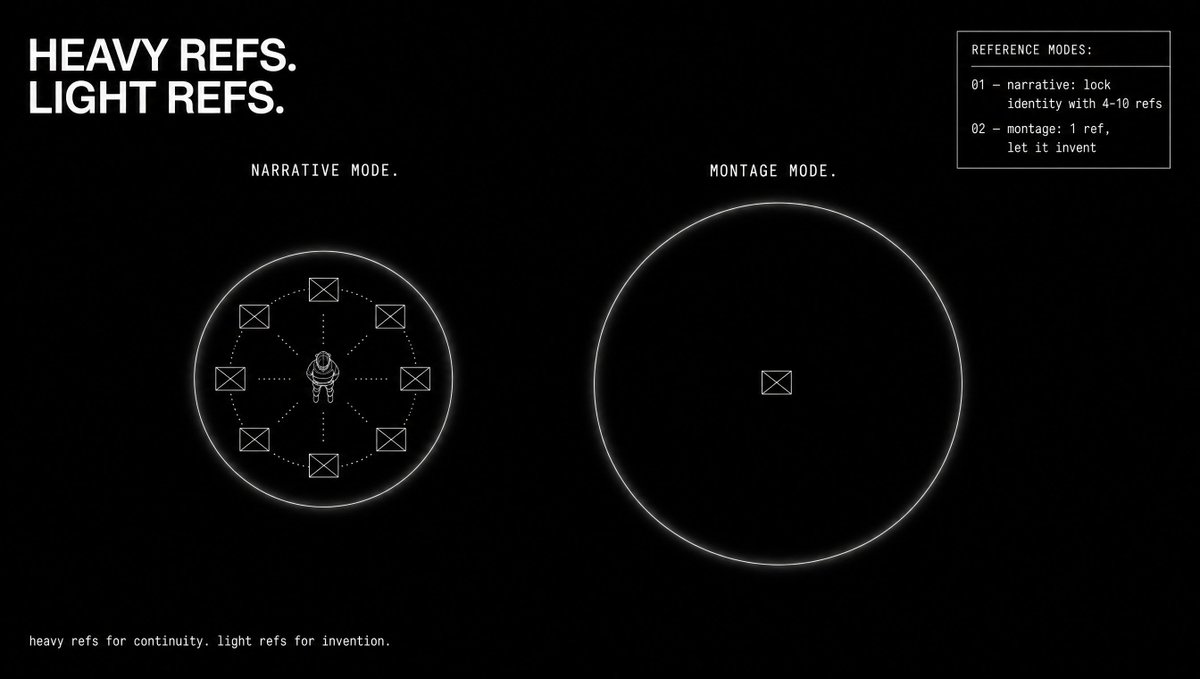
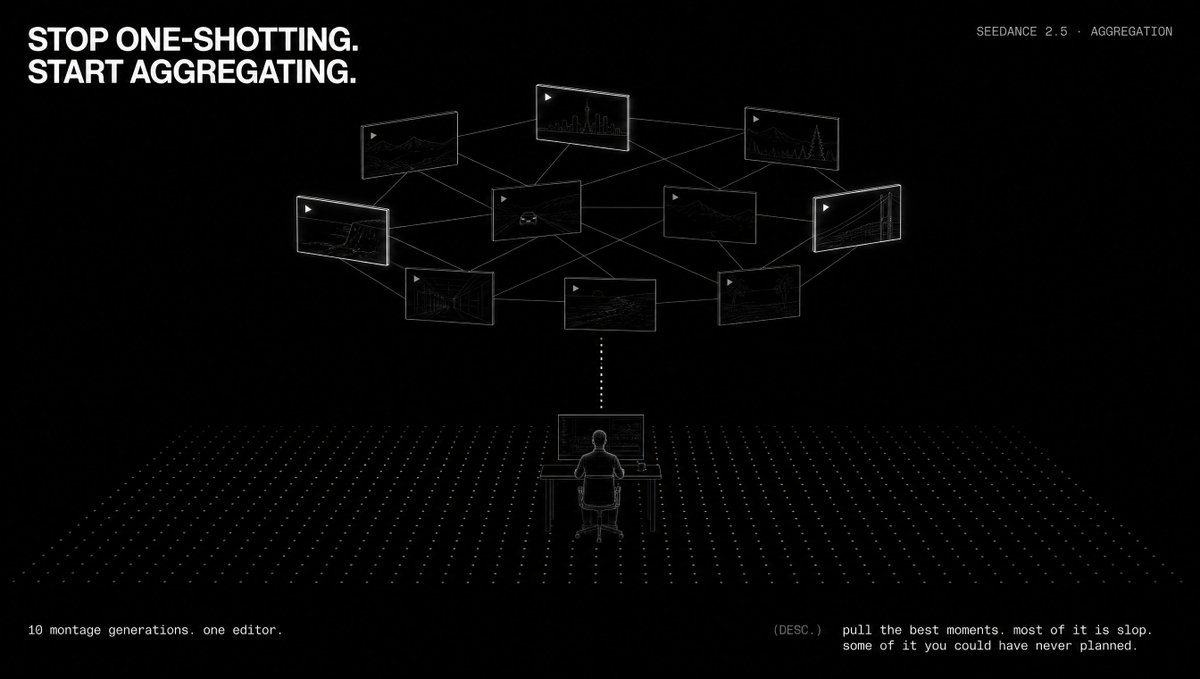
15-second cinematic fighter jet montage demonstrating Seedance 2.5's aggregation workflow: 13 beats in 15 seconds, single reference image (@image1) carrying pilot + jet + environment, montage-style prompting for…
This template uses your photo — add one with the + button.
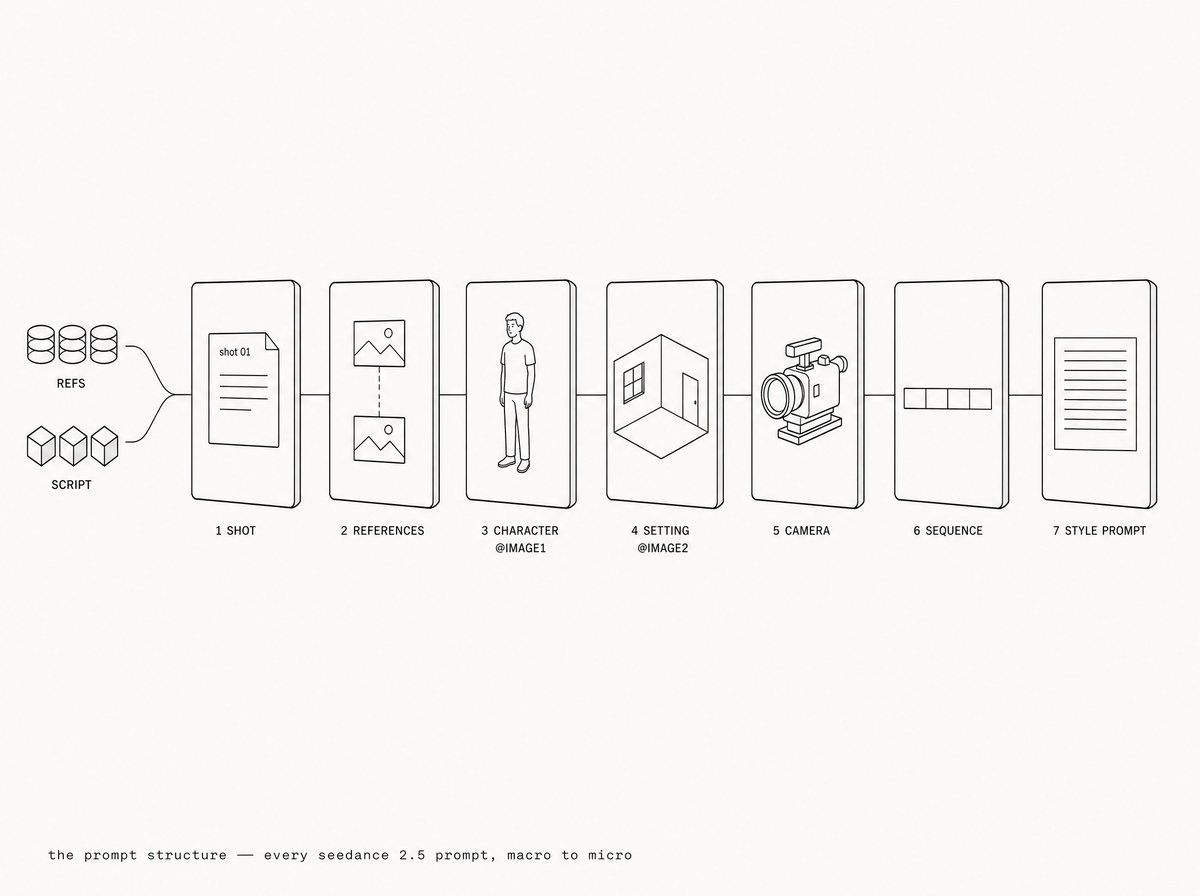
CHARACTER @image1: A disciplined young military test pilot with an athletic compact build, a defined square jaw, calm dark eyes, short dark-brown hair, and a controlled mission-ready presence. He stays emotionally restrained even in extreme combat, reacting through precise eye movements, controlled breathing, and economical control inputs rather than exaggerated performance. Clothing locked: dark flight suit with subtle tactical paneling, black gloves, black combat boots, oxygen mask, and a matte dark pilot helmet with a smoked visor fully lowered. CINEMATOGRAPHY: ultra-dynamic cinematic aerial-combat coverage using 18mm rigid cockpit mounts, 24mm air-to-air chase cameras, 35mm underside and wingline tracking shots, 50mm pilot close-ups, 85mm explosive near-pass angles, and 135mm long-lens silhouette flybys. Prioritize a large variety of aggressive angles: nose-on closing passes, belly-up overhead flybys, wingtip-mounted bank shots, rear chase, top-down dive coverage, close crossing passes through smoke, and distant long-lens explosions. Camera motion must obey believable aircraft inertia, air resistance, G-force, speed, and combat geometry. The primary jet from @image1 must remain perfectly consistent and sharply readable in every shot. Opposing aircraft should remain secondary, simpler, and often seen as distant or brief fast silhouettes so the reference image stays stable. Bright high-altitude daylight, broken cloud layers, hard metallic edge light, deep blue-grey shadow planes, shock-vapor in hard turns, blast smoke, expanding fireballs, and drifting debris silhouettes. Sound FX only, no music. Face stable throughout, no deformation. SETTING @image1: high-altitude coastal combat airspace above layered cloud banks and a distant ocean horizon. Preserve the exact sleek dark fighter aircraft from @image1: exact silhouette, wing geometry, tail shape, cockpit shape, surface paneling, colors, markings, and proportions. Multiple hostile aircraft may appear as secondary opposing fighters with simpler distant silhouettes and restrained contrasting markings. Explosions occur in open sky, around cloud gaps, and along enemy flight paths, with expanding smoke rings, burning fragments, and brief fireball blooms. Keep the primary aircraft undamaged and visually locked. REFERENCE: @image1 is the locked pilot identity, facial anatomy, helmet, visor, oxygen mask, flight suit, gloves, and cockpit behavior reference. @image1 is the locked primary fighter-jet design, cockpit architecture, materials, proportions, markings, sky environment, and lighting reference. Preserve the primary aircraft exactly throughout. Do not reinterpret, redesign, or merge the reference subjects. SEQUENCE 0–1.2s: Extreme cockpit close-up from the pilot's right side. @image1's eyes flick sharply upward as warning reflections and a fast enemy silhouette flash across the smoked visor. Camera is rigid and close, with only subtle cockpit vibration. Oxygen-mask breathing, radio crackle, urgent targeting alert. 1.2–2.3s: Nose-on closing pass in open sky. The locked primary jet screams straight toward camera while an opposing jet streaks past in the opposite direction only feet away, producing a violent near-miss crossing. Camera holds almost static until both aircraft whip through frame. Two overlapping turbine roars, cracking pass-by, wind blast. 2.3–3.4s: Top-down dive shot from high above. The primary aircraft plunges through a broken cloud gap after a secondary enemy jet below, trailing thin vapor from the wings. Camera follows from above and behind with a steep descending angle. Rising turbine pitch, rushing air, subtle airframe groan. 3.4–4.5s: Wingtip-mounted angle looking inward along the fuselage. The horizon rolls aggressively as the primary jet snaps through a hard bank and a bright explosion blooms far behind in the background cloud layer where a missile detonates near an enemy aircraft. Camera stays rigid to the jet. Vapor rush, distant explosion thump, warning tone. 4.5–5.7s: Ultra-wide underside flyby. The primary fighter roars directly overhead, belly fully visible, while fiery debris falls in the far background from a damaged opposing aircraft. Camera remains low and static as the jet tears past. Jet thunder, debris whistling, distant fire crackle. 5.7–6.8s: Cockpit front three-quarter close-up. @image1 remains composed and focused, making one exact control-stick pull while the canopy reflections spin with the changing horizon. Breathing intensifies, avionics beeps, control-surface rumble. 6.8–7.9s: Rear chase shot extremely close behind the primary jet. An enemy aircraft fills the distance ahead. The primary releases a short burst of missiles or projectiles from beneath the wingline, which streak forward in clean stepped motion-smear arcs. Camera remains aligned to preserve the jet silhouette. Launch clacks, rocket hiss, engine thunder. 7.9–9.0s: Long-lens compression shot through cloud layers. One enemy aircraft is struck mid-turn and erupts into a sharp bright fireball, breaking into burning fragments and black smoke while another hostile silhouette slices across the foreground. Keep the explosion distant and readable, not messy. Explosion crack, tumbling debris hiss, fading engine whine. 9.0–10.0s: Belly-up passing angle from beneath a banking turn. The primary jet rolls above the camera while a second explosion blooms off to the right side of frame, briefly backlighting the aircraft edges with hot orange against cool sky. Jet roar peaks, expanding fireball rumble, wind shear. 10.0–11.1s: Tight cockpit-side close-up. The pilot braces subtly and shoves one control forward, still emotionally restrained. Reflected fire and cloud light slide across the visor. Oxygen-mask breathing, warning tone dropping, avionics hum. 11.1–12.1s: Side-profile chase shot. The primary jet races left to right while an enemy jet streaks toward camera in the opposite direction in the deep background, passing through a cloud of smoke and sparks from a previous detonation. Camera matches the primary briefly for a clean locked silhouette. Crossing turbine roar, smoke turbulence, distant debris impacts. 12.1–13.2s: Near-head-on air-to-air shot. The primary jet cuts diagonally across frame and unleashes defensive flares as another explosion erupts behind and above, creating layered chaos without obscuring the jet design. The flares appear as sharp stepped graphic streaks. Flare pops, blast thump, rushing air. 13.2–15s: Heroic rear three-quarter climb shot. The primary fighter punches up through smoke and broken clouds into hard white sunlight while a large enemy explosion and drifting black plume recede far below in the background. Camera settles into formation behind the locked aircraft and holds it steady as it escapes the battle space. Engine thunder stabilizes, radio static fades, wind softens into distance. STYLE: [your style prompt goes here, identical in every shot. how to build your own is at the bottom of this article] negative: no face morph, no identity drift, no helmet redesign, no oxygen-mask deformation, no aircraft redesign, no changing wing geometry, no changing tail shape, no changing markings, no duplicated primary jet, no aircraft merging, no bent wings, no floating aircraft parts, no impossible instant direction changes, no weightless movement, no random extra jets beyond brief enemy silhouettes, no close-detailed enemy cockpit shots, no primary aircraft damage, no pilot ejecting, no graphic injury, no gore, no cockpit explosion, no oversized unrealistic mushroom clouds, no sci-fi lasers, no neon engine glow, no photoreal rendering, no smooth commercial CGI, no motion blur
CHARACTER @image1: A disciplined young military test pilot with an athletic compact build, a defined square jaw, calm dark eyes, short dark-brown hair, and a controlled mission-ready presence. He stays emotionally restrained even in extreme combat, reacting through precise eye movements, controlled breathing, and economical control inputs rather than exaggerated performance. Clothing locked: dark flight suit with subtle tactical paneling, black gloves, black combat boots, oxygen mask, and a matte dark pilot helmet with a smoked visor fully lowered. CINEMATOGRAPHY: ultra-dynamic cinematic aerial-combat coverage using 18mm rigid cockpit mounts, 24mm air-to-air chase cameras, 35mm underside and wingline tracking shots, 50mm pilot close-ups, 85mm explosive near-pass angles, and 135mm long-lens silhouette flybys. Prioritize a large variety of aggressive angles: nose-on closing passes, belly-up overhead flybys, wingtip-mounted bank shots, rear chase, top-down dive coverage, close crossing passes through smoke, and distant long-lens explosions. Camera motion must obey believable aircraft inertia, air resistance, G-force, speed, and combat geometry. The primary jet from @image1 must remain perfectly consistent and sharply readable in every shot. Opposing aircraft should remain secondary, simpler, and often seen as distant or brief fast silhouettes so the reference image stays stable. Bright high-altitude daylight, broken cloud layers, hard metallic edge light, deep blue-grey shadow planes, shock-vapor in hard turns, blast smoke, expanding fireballs, and drifting debris silhouettes. Sound FX only, no music. Face stable throughout, no deformation. SETTING @image1: high-altitude coastal combat airspace above layered cloud banks and a distant ocean horizon. Preserve the exact sleek dark fighter aircraft from @image1: exact silhouette, wing geometry, tail shape, cockpit shape, surface paneling, colors, markings, and proportions. Multiple hostile aircraft may appear as secondary opposing fighters with simpler distant silhouettes and restrained contrasting markings. Explosions occur in open sky, around cloud gaps, and along enemy flight paths, with expanding smoke rings, burning fragments, and brief fireball blooms. Keep the primary aircraft undamaged and visually locked. REFERENCE: @image1 is the locked pilot identity, facial anatomy, helmet, visor, oxygen mask, flight suit, gloves, and cockpit behavior reference. @image1 is the locked primary fighter-jet design, cockpit architecture, materials, proportions, markings, sky environment, and lighting reference. Preserve the primary aircraft exactly throughout. Do not reinterpret, redesign, or merge the reference subjects. SEQUENCE 0–1.2s: Extreme cockpit close-up from the pilot's right side. @image1's eyes flick sharply upward as warning reflections and a fast enemy silhouette flash across the smoked visor. Camera is rigid and close, with only subtle cockpit vibration. Oxygen-mask breathing, radio crackle, urgent targeting alert. 1.2–2.3s: Nose-on closing pass in open sky. The locked primary jet screams straight toward camera while an opposing jet streaks past in the opposite direction only feet away, producing a violent near-miss crossing. Camera holds almost static until both aircraft whip through frame. Two overlapping turbine roars, cracking pass-by, wind blast. 2.3–3.4s: Top-down dive shot from high above. The primary aircraft plunges through a broken cloud gap after a secondary enemy jet below, trailing thin vapor from the wings. Camera follows from above and behind with a steep descending angle. Rising turbine pitch, rushing air, subtle airframe groan. 3.4–4.5s: Wingtip-mounted angle looking inward along the fuselage. The horizon rolls aggressively as the primary jet snaps through a hard bank and a bright explosion blooms far behind in the background cloud layer where a missile detonates near an enemy aircraft. Camera stays rigid to the jet. Vapor rush, distant explosion thump, warning tone. 4.5–5.7s: Ultra-wide underside flyby. The primary fighter roars directly overhead, belly fully visible, while fiery debris falls in the far background from a damaged opposing aircraft. Camera remains low and static as the jet tears past. Jet thunder, debris whistling, distant fire crackle. 5.7–6.8s: Cockpit front three-quarter close-up. @image1 remains composed and focused, making one exact control-stick pull while the canopy reflections spin with the changing horizon. Breathing intensifies, avionics beeps, control-surface rumble. 6.8–7.9s: Rear chase shot extremely close behind the primary jet. An enemy aircraft fills the distance ahead. The primary releases a short burst of missiles or projectiles from beneath the wingline, which streak forward in clean stepped motion-smear arcs. Camera remains aligned to preserve the jet silhouette. Launch clacks, rocket hiss, engine thunder. 7.9–9.0s: Long-lens compression shot through cloud layers. One enemy aircraft is struck mid-turn and erupts into a sharp bright fireball, breaking into burning fragments and black smoke while another hostile silhouette slices across the foreground. Keep the explosion distant and readable, not messy. Explosion crack, tumbling debris hiss, fading engine whine. 9.0–10.0s: Belly-up passing angle from beneath a banking turn. The primary jet rolls above the camera while a second explosion blooms off to the right side of frame, briefly backlighting the aircraft edges with hot orange against cool sky. Jet roar peaks, expanding fireball rumble, wind shear. 10.0–11.1s: Tight cockpit-side close-up. The pilot braces subtly and shoves one control forward, still emotionally restrained. Reflected fire and cloud light slide across the visor. Oxygen-mask breathing, warning tone dropping, avionics hum. 11.1–12.1s: Side-profile chase shot. The primary jet races left to right while an enemy jet streaks toward camera in the opposite direction in the deep background, passing through a cloud of smoke and sparks from a previous detonation. Camera matches the primary briefly for a clean locked silhouette. Crossing turbine roar, smoke turbulence, distant debris impacts. 12.1–13.2s: Near-head-on air-to-air shot. The primary jet cuts diagonally across frame and unleashes defensive flares as another explosion erupts behind and above, creating layered chaos without obscuring the jet design. The flares appear as sharp stepped graphic streaks. Flare pops, blast thump, rushing air. 13.2–15s: Heroic rear three-quarter climb shot. The primary fighter punches up through smoke and broken clouds into hard white sunlight while a large enemy explosion and drifting black plume recede far below in the background. Camera settles into formation behind the locked aircraft and holds it steady as it escapes the battle space. Engine thunder stabilizes, radio static fades, wind softens into distance. STYLE: [your style prompt goes here, identical in every shot. how to build your own is at the bottom of this article] negative: no face morph, no identity drift, no helmet redesign, no oxygen-mask deformation, no aircraft redesign, no changing wing geometry, no changing tail shape, no changing markings, no duplicated primary jet, no aircraft merging, no bent wings, no floating aircraft parts, no impossible instant direction changes, no weightless movement, no random extra jets beyond brief enemy silhouettes, no close-detailed enemy cockpit shots, no primary aircraft damage, no pilot ejecting, no graphic injury, no gore, no cockpit explosion, no oversized unrealistic mushroom clouds, no sci-fi lasers, no neon engine glow, no photoreal rendering, no smooth commercial CGI, no motion blur
Fighter Jet Aerial Combat Montage — Seedance 2.5 needs input media to work. Open it in the studio and these load alongside the prompt — pick whichever ones your chosen model can take.
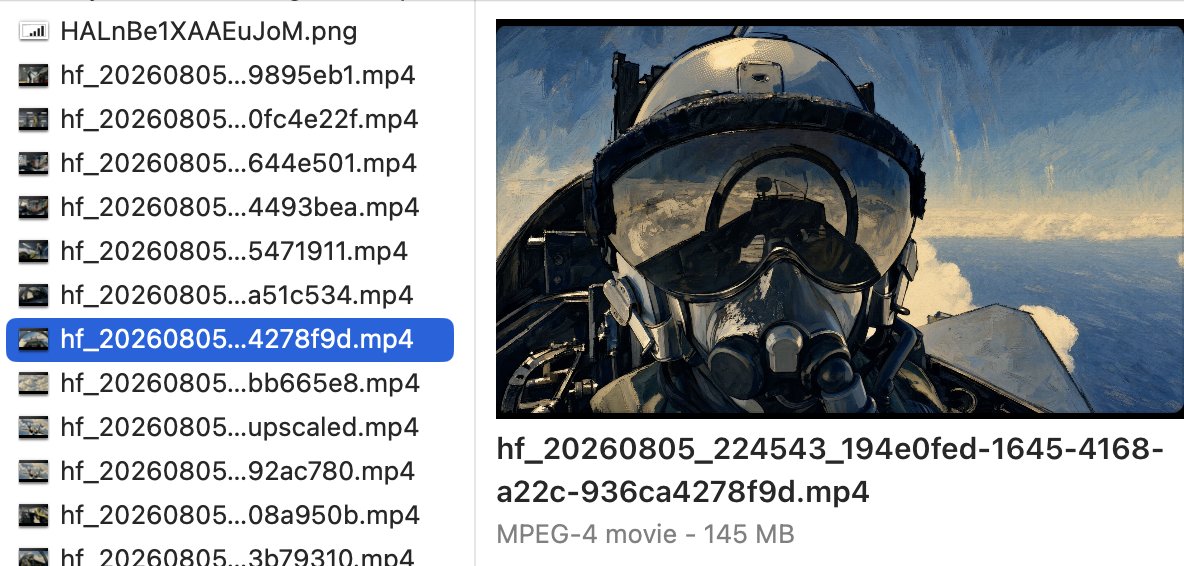
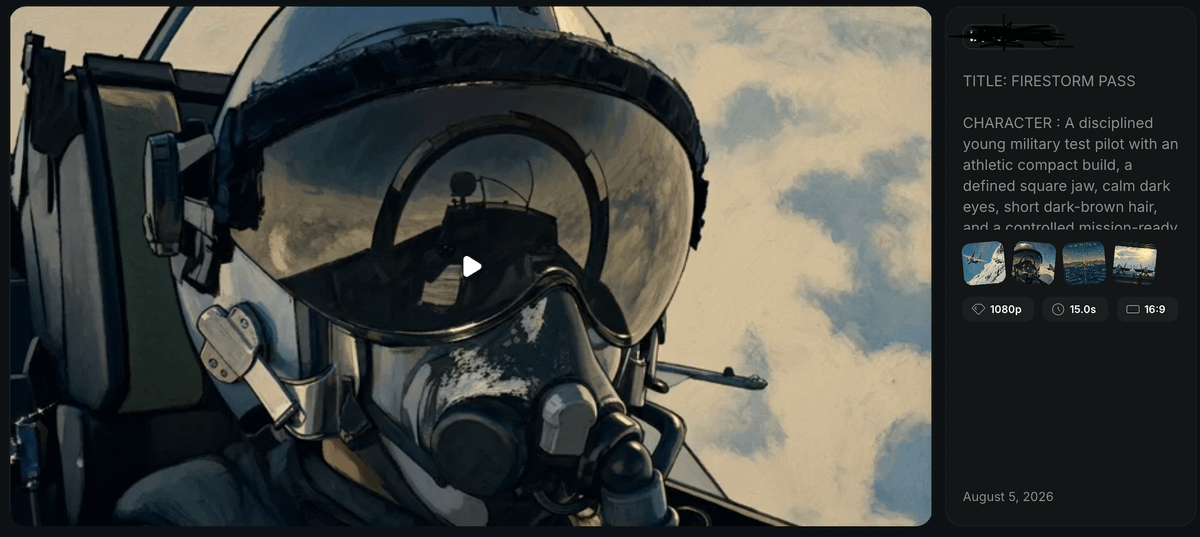
Edit the prompt in the box under the preview — the template's model and format are already selected — and press Generate. Your version appears right on this page.
Yes. You can change the subject, setting, lighting, mood, format, and available model controls before creating your video.
Opening and editing this template is free. Generating uses credits, shown on the Generate button when you are signed in.
Start with seedance-2.5, which is the model associated with this template. You can compare another compatible model for a different finish.
Follow a topic to a crawlable collection of related PicX Studio templates.