How do I use the Chinese Alzheimer’s Infographic Poster template?
Edit the prompt in the box under the preview — the template's model and format are already selected — and press Generate. Your version appears right on this page.
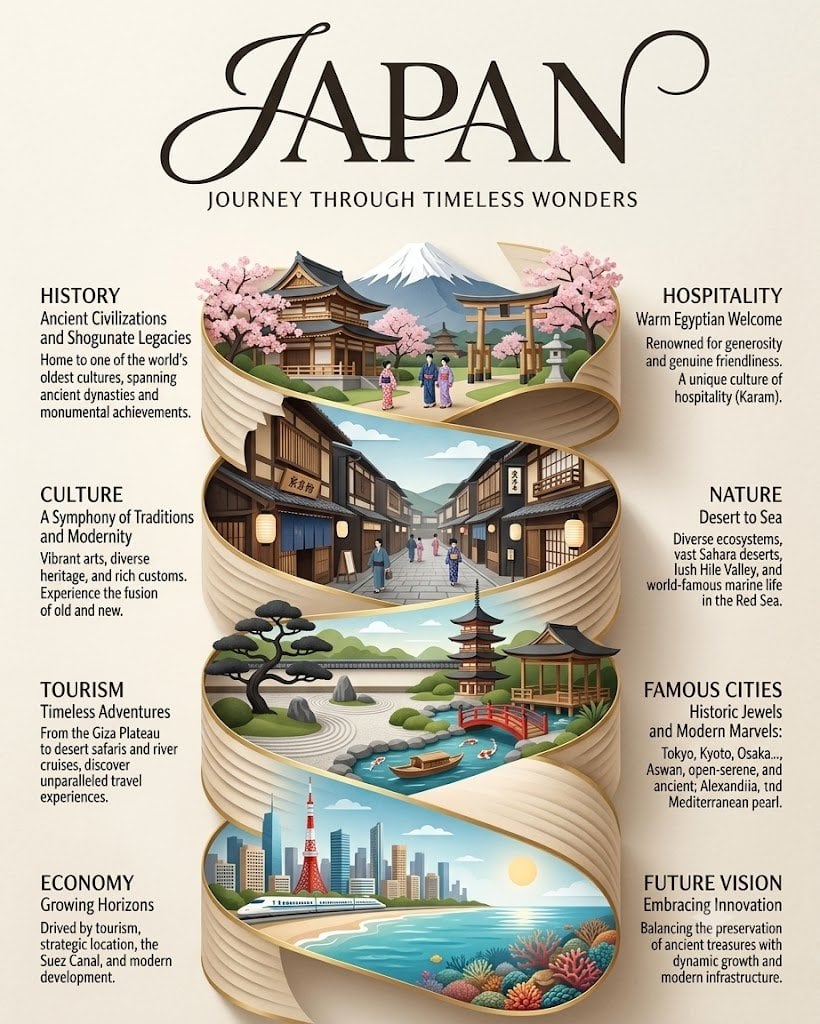
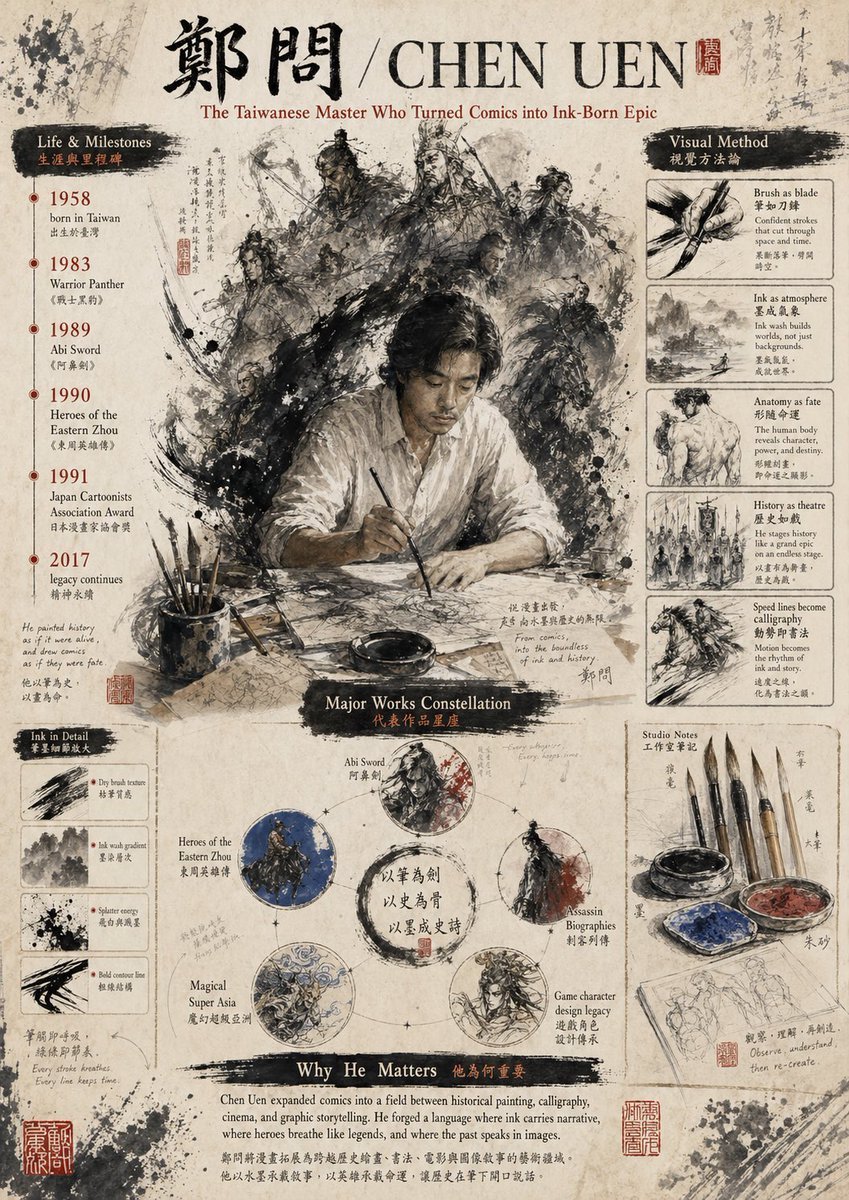
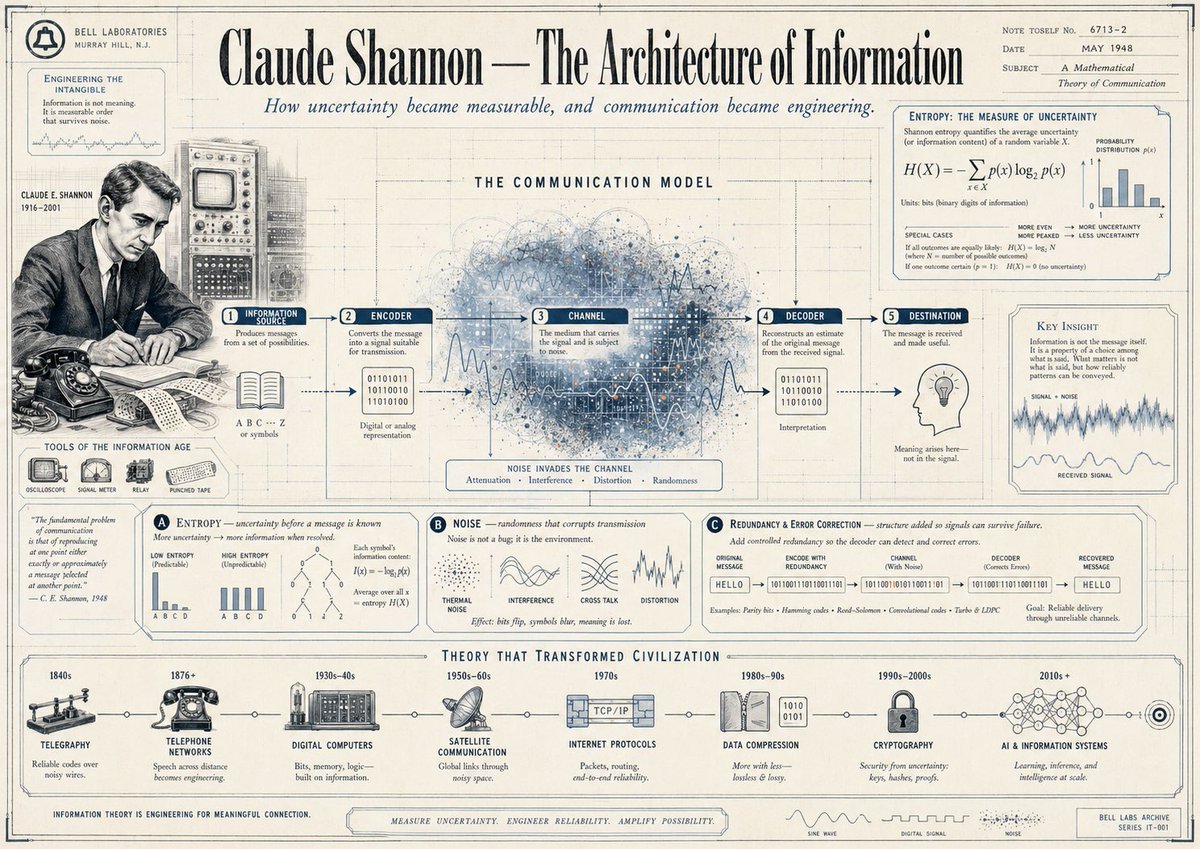
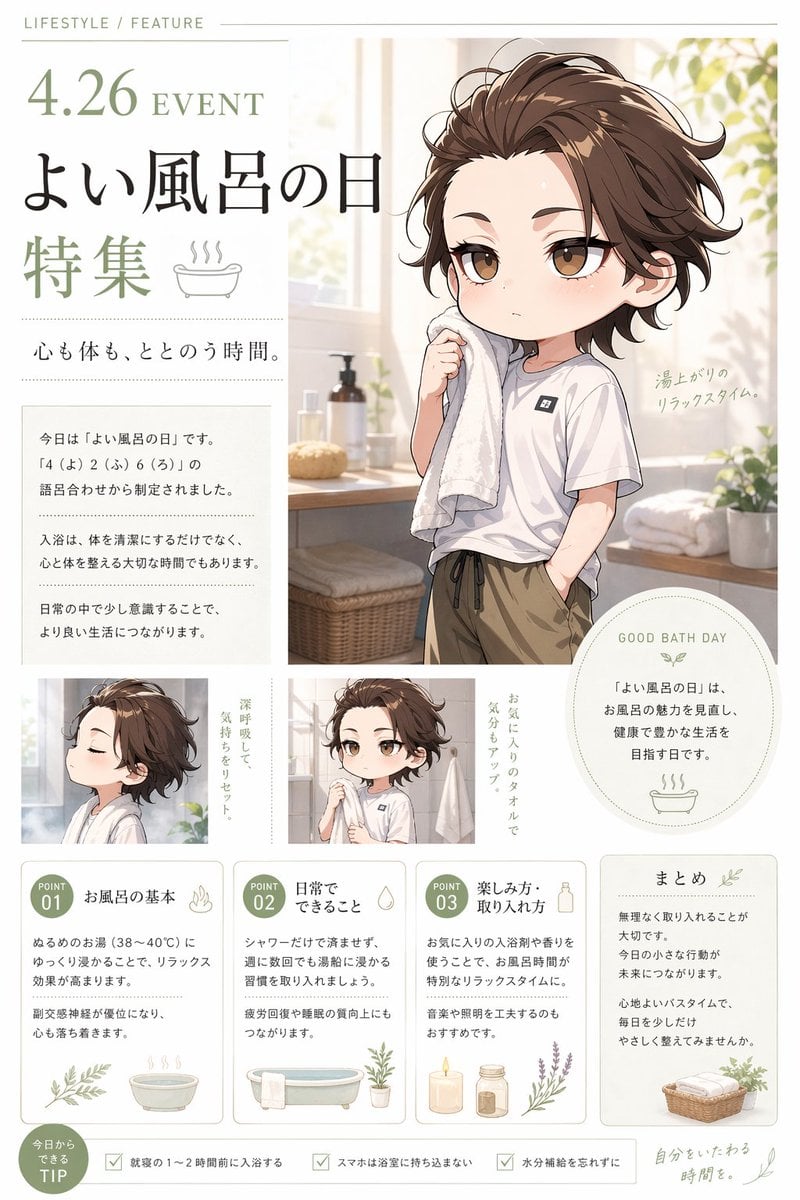
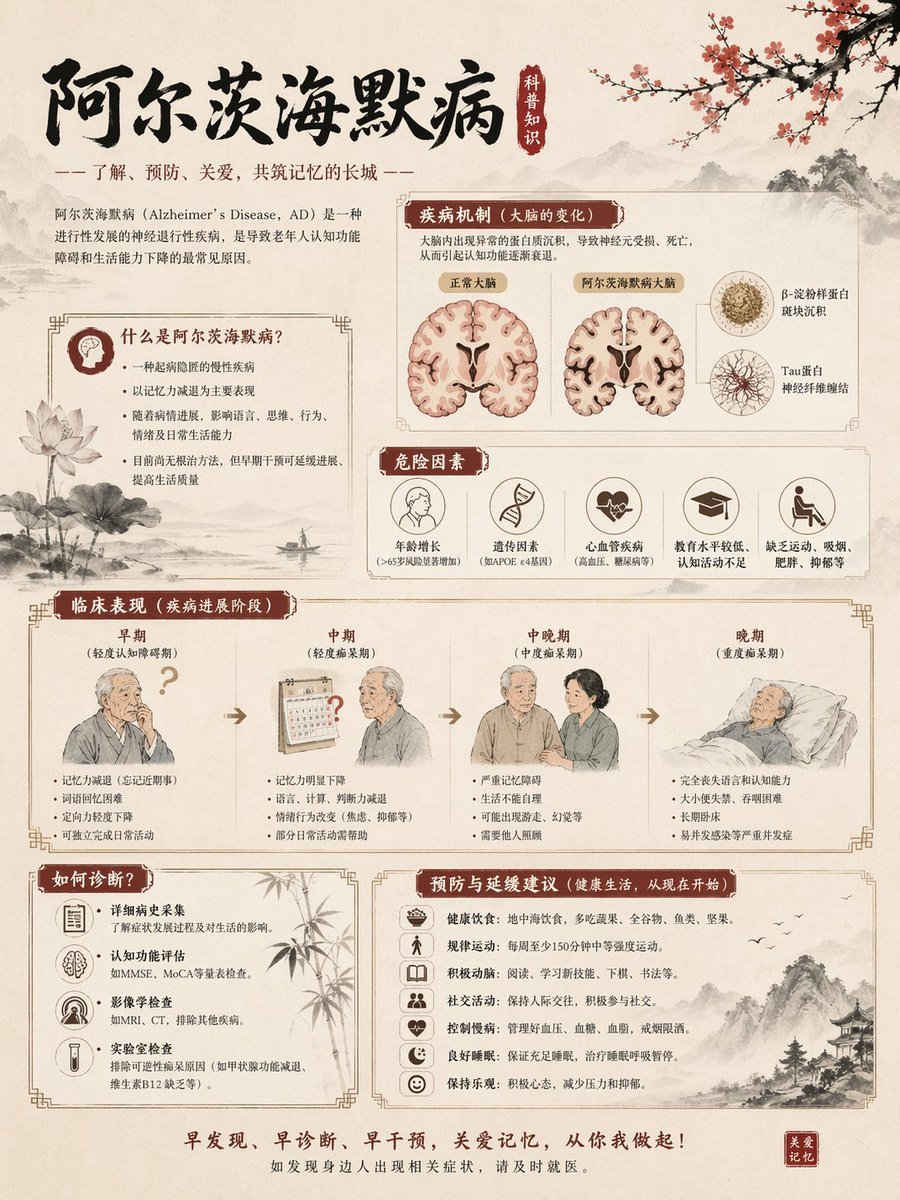
A detailed traditional-style Chinese medical infographic poster explaining Alzheimer’s disease for health education, awareness campaigns, and social media science posts.

This template uses your photo — add one with the + button.
{"type":"traditional Chinese medical infographic poster","topic":"{argument name=\"topic\" default=\"阿尔茨海默病(老年痴呆症)\"}","title":"{argument name=\"headline text\" default=\"阿尔茨海默病(老年痴呆症)- 详细信息图表\"}","language":"Chinese","style":{"overall":"educational health infographic in vintage Chinese poster style","rendering":"clean hand-painted illustration, soft watercolor textures, thin ink outlines, muted pastel colors","palette":"teal, beige, cream, jade green, dusty blue, warm brown, light coral","decorative frame":"ornate scroll-like border with gold trim","background":"pale sky-blue backdrop with traditional Chinese landscape motifs, stylized clouds, pine trees, mountains, cranes, and waves"},"layout":{"format":"vertical poster","sections":[{"title":"1. 疾病概览","position":"top-left","count":1,"labels":["认知下降","记忆丧失"],"content":"one large panel explaining that Alzheimer disease is a progressive neurodegenerative disorder, featuring an elderly side-profile portrait with a semi-transparent brain illustration showing degeneration and small neuron icons around the brain"},{"title":"2. 常见症状","position":"top-right","count":6,"labels":["轻度","中度","重度","遗忘","情感波动","言语困难","迷失方向","丧失生活自理"],"content":"a symptom panel arranged as 3 columns by severity, with 6 vignette illustrations of elderly people: forgetting at a table, emotional fluctuation, headache or confusion, speech difficulty, getting lost outdoors, and losing ability for daily self-care with assistance from another person"},{"title":"3. 病理原因","position":"middle-left","count":4,"labels":["淀粉样蛋白斑块","Aβ deposits","Tau蛋白缠结","Neurofibrillary tangles","神经元损失","Apoptosis"],"content":"a cross-section anatomical brain diagram with bilingual annotations pointing to amyloid beta deposits, tau protein tangles, neurofibrillary tangles, and neuron loss"},{"title":"4. 风险因素","position":"middle-right","count":5,"labels":["年龄","遗传","心血管病","受教育程度","头部外伤"],"content":"five icon-based risk factors shown in a grid: an elderly bust for age, DNA helix for genetics, anatomical heart for cardiovascular disease, stacked books for education level, and a head profile with bandage for head trauma"},{"title":"5. 诊断方法","position":"bottom-left","count":4,"labels":["认知测试","MMSE","脑部成像","生物标志物"],"content":"a diagnosis panel with a doctor consulting an elderly patient at a desk, plus three diagnostic visuals: an MMSE test sheet, a brain imaging scan with MRI-like machine, and a test tube representing biomarkers"},{"title":"6. 治疗与关爱","position":"bottom-right","count":7,"labels":["药物治疗","药丸","Donepezil","Memantine","非药物疗法","老人打太极拳","音乐","画画","照护与支持","家庭支持和老人","理解、耐心、尊敬"],"content":"a care and treatment panel divided into 3 columns: medication with two pills and the words Donepezil and Memantine, non-drug therapy with tai chi, music, and painting, and caregiving support with family companionship plus a smaller scene emphasizing understanding, patience, and respect"}],"header":{"count":1,"text":"large centered Chinese calligraphy title banner at the top"},"panel_style":"six rounded rectangular cream panels with decorative teal-and-gold title tabs"},"composition":{"symmetry":"balanced two-column arrangement with three rows of paired panels","readability":"clear educational hierarchy with large title, numbered section headers, medium illustrations, and bold labels","density":"information-dense but visually friendly"},"negative_constraints":["no photorealism","no modern flat UI","no dark horror tone","no clutter outside the six main panels","no extra sections beyond the 6 numbered panels"],"quality":"high-resolution, polished infographic suitable for public health education, hospital waiting rooms, science communication posts, or social media comparison graphics"}
Edit the prompt in the box under the preview — the template's model and format are already selected — and press Generate. Your version appears right on this page.
Yes. You can change the subject, setting, lighting, mood, format, and available model controls before creating your image.
Opening and editing this template is free. Generating uses credits, shown on the Generate button when you are signed in.
Start with GPT Image 2, which is the model associated with this template. You can compare another compatible model for a different finish.
Follow a topic to a crawlable collection of related PicX Studio templates.