How do I use the DiT Parasite in Autoencoder Latent Diagram template?
Choose the primary action to open PicX Studio with the available template settings. Review the model and format, personalize the creative direction, and generate when ready.
A minimalist monochrome technical cartoon diagram showing a DiT creature living inside an autoencoder latent space for use in ML articles or explainers. Change the subject, setting, or lighting one variable at a time.
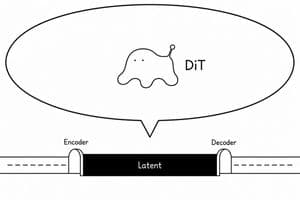
Create a minimalist black-and-white conceptual diagram on a wide 16:9 white canvas showing a diffusion-transformer creature parasitizing an autoencoder latent space. Use thin hand-drawn black outlines and simple sans-serif labels, with a clean article-illustration style. Across the lower third, draw a horizontal pipeline: a long white tube enters from the left with a dashed centerline, passes through a small rounded arch labeled “Encoder,” then becomes a solid black rectangular central block labeled “Latent” in white, then exits through a matching rounded arch labeled “Decoder” into a white tube on the right with a dashed centerline. Above the latent block, draw one very large oval speech-bubble or callout balloon with a pointed tail aimed down toward the latent block. Inside the balloon, centered slightly left, draw exactly one small blob-like creature: soft amoeba body, two tiny dot eyes, four rounded drippy legs, and one raised antenna ending in a small circle; make it mildly uncanny but not scary and not overly cute. To the right of the creature inside the balloon, place the label “{argument name="creature label" default="DiT"}” in black. Use exactly three visible text labels on the diagram: “Encoder,” “Latent,” and “Decoder,” plus the creature label. Keep the composition sparse, monochrome, no shading, no color, no extra icons, no watermark.
Choose the primary action to open PicX Studio with the available template settings. Review the model and format, personalize the creative direction, and generate when ready.
Yes. You can change the subject, setting, lighting, mood, format, and available model controls before creating your image.
This template is free to open and customize. Generation usage is shown in PicX Studio before you create.
Start with GPT Image 2, which is the model associated with this template. You can compare another compatible model for a different finish.
© 2026 PicX Studio. All rights reserved.

Follow a topic to a crawlable collection of related PicX Studio templates.
43,474 public templates available. Verified via the PicX Studio public templates API; refreshed hourly.
![Futuristic Editorial Poster Design — Conceptual futuristic editorial poster design featuring {argument name="subject" default="[HUMAN]"} in a large side-profile](https://cms-assets.youmind.com/media/1783674266642_w5ackl_HMwT7e4awAE4ikD-300x375.jpg)
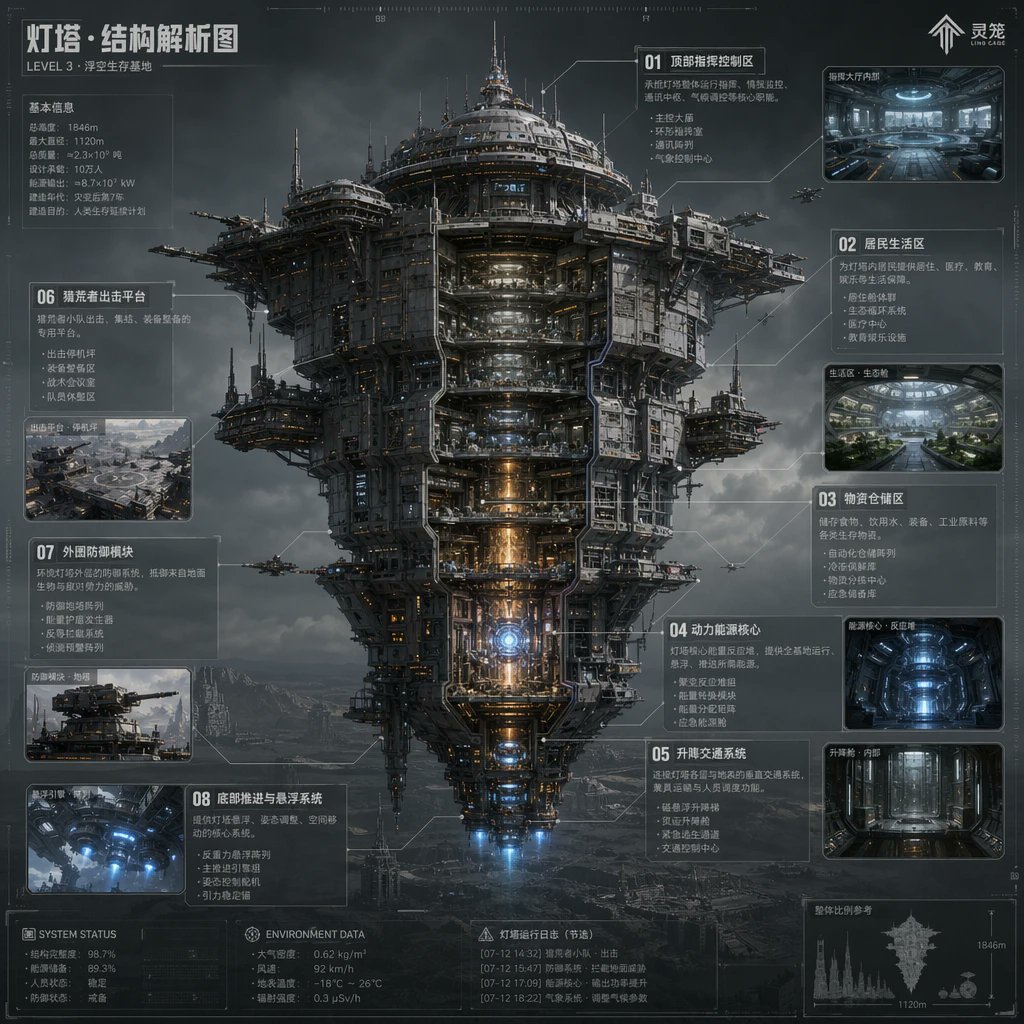



![Technical Cross-Section Diagram — Hyper-detailed technical cross-section diagram of a {argument name="object" default="[type here object]"} rendered in a dark e](https://cms-assets.youmind.com/media/1777539320782_lipcbg_HHEf1rVbUAEy-2z.jpg)
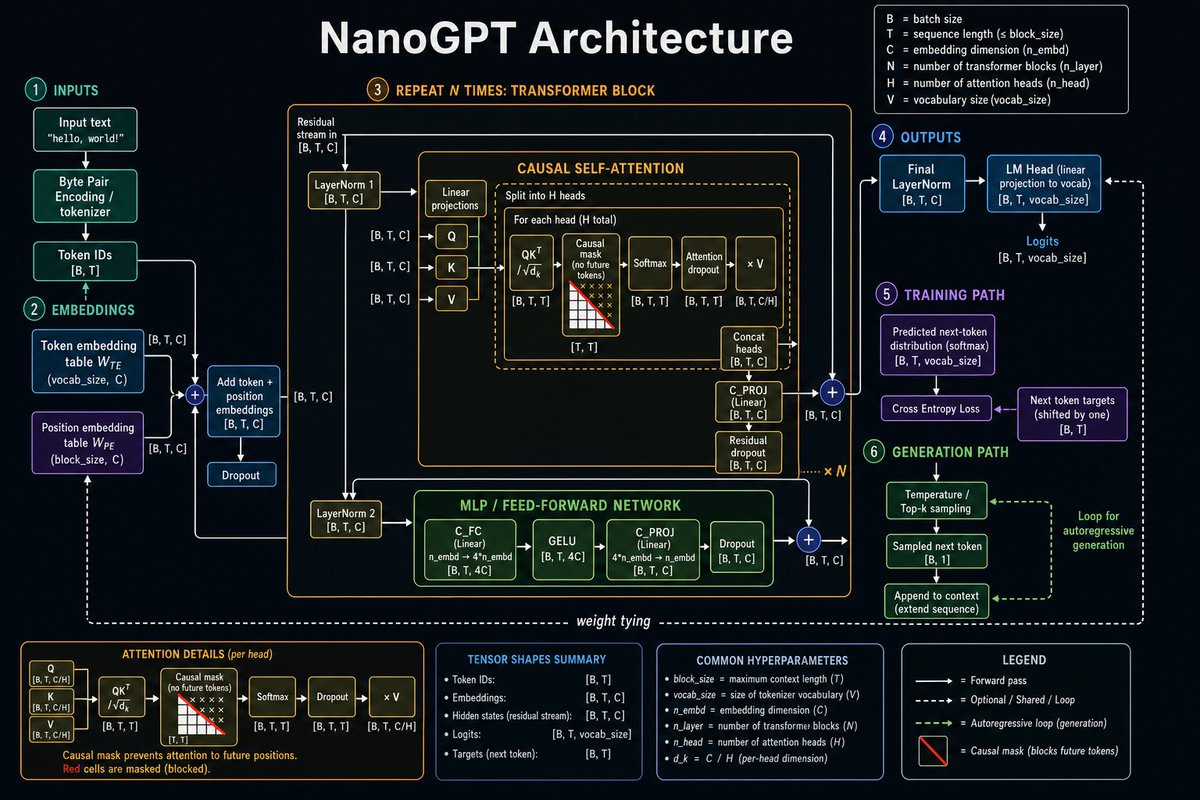


![Victorian Steampunk Engineering Diagram — Engineering cross-section of {argument name="subject" default="[STEAMPUNK BUILDING]"}, Victorian era. 5 labeled floors](https://cms-assets.youmind.com/media/1779786532770_o9jpca_HJIHQj7bcAASuwR.jpg)


![Minimalist Flat Vector Travel Poster — Premium minimalist flat-vector travel poster for {argument name="city name" default="[CITY_NAME]"}, 3:4 vertical format.](https://cms-assets.youmind.com/media/1787917359711_3ug846_HQX205cbMAA6F6S-300x400.jpg)